The Biblical Mind
The Biblical Mind is dedicated to helping its audience understand how the biblical authors thought, promoting Bible fluency through curious, careful reading of Scripture. It is hosted by Dr. Dru Johnson and published by the Center for Hebraic Thought, a hub for research and resources on the intellectual world of the Bible.
Listen on:







Episodes
Friday Oct 15, 2021
Friday Oct 15, 2021
Starting 10/22:
"By the Oppressed to the Oppressed: How the Marginalized Church Reads the Bible," featuring Vince Bantu, Esau McCaulley, Lisa Bowens, and Anthony Bradley
Upcoming
Series on repentance and reconciliation, featuring Rachael and Jacob Denhollander, and others TBD
Friday Oct 08, 2021
Friday Oct 08, 2021
The Pillar Seminary was founded to address persistent problems in churches and their leadership. Its students not only receive a Scripture-first education—as opposed to theology-first—but also quickly begin practicing what they're taught.
The purpose of studying the biblical texts is to be transformed by them. True "head knowledge" of Scripture involves "heart knowledge"; by practicing biblical principles, we can understand the text better.
Join us this week as Scott Booth, Dan Lowery, and Donnell J. Moore discuss how Pillar's approach to seminary and studying Scripture ultimately transforms students, equipping them to lead in their local churches, make disciples, and meet needs effectively within their ministries.
Show Notes:
0:26 Purpose of the program
2:08 Common core for Bible and leadership
3:23 Leadership training
10:39 Bible classes for the purpose of transformation
11:52 Head knowledge and heart knowledge
14:28 Spiritual autobiography
18:17 Equipped by God
21:37 What is the mission?
22:33 Journeying through the text
28:41 What's the meal, where's the deal?
31:37 Reading the Bible three times through
Show notes by Dominique LaCroix
Credits for the music used in TBM podcast.

Friday Oct 01, 2021
Friday Oct 01, 2021
Many Christians know that Jesus was a Jew, but they don't necessarily think much about this fact or grasp its significance. In this episode, Jen Rosner discusses the importance of recognizing that Jesus embraced his Jewish identity in his lifetime, and the implications of his Judaism for the church and for our understanding of the New Testament today.
Show notes:
0:27 Encountering the New Testament as a Jew
3:07 Shelving Judaism (for a time)
7:54 Keeping Second-Temple Judaism alive
11:03 Straying from our roots
15:05 Paul's Torah observance
20:08 Jesus, Torah-observant Jew
21:32 Healed by the tzitzit on his garments
23:39 Ritual purity and adding layers to the text
25:11 Jesus did not come to abolish the law
26:29 Jen's recommended reads
31:50 Pertaining to the land and Zionism
Show notes by Dominique LaCroix
Credits for the music used in TBM podcast.

Friday Sep 24, 2021
Friday Sep 24, 2021
Left Behind. This Present Darkness. Love Come Softly. The culture of faith in the West has been greatly shaped by Christian fiction. Many books that are popular in Christian circles plant flags of doctrines within their pages, providing something for Christians to buy into.
Join us this week as Daniel Silliman (author of Reading Evangelicals: How Christian Fiction Shaped a Culture and a Faith and news editor for Christianity Today) discusses how books such as Left Behind have influenced evangelicalism, and how the book market more broadly has influenced Western Christianity.
Show notes:
0:27 Fictional vs. non-fictional arguments
2:44 Christian fiction and the effect on culture
4:44 Novel belief and worldviews
8:17 How to think about evangelicals
9:54 Advocating vs. reflecting
10:47 The book market shapes evangelical culture
13:54 Creating narratives literature
16:48 Mental spaces and formative belief
21:26 Supposing
24:26 Fighting the imagination
30:18 Assume the importance of the four gospels
31:59 How Scripture teaches through narrative
32:09 Objection to mass Christian literature
34:24 Book recommendations
Show notes by Dominique LaCroix
Credits for the music used in TBM podcast.

Friday Sep 17, 2021
Friday Sep 17, 2021
Somewhere along the line, we have inherited many "mistruths" about Scripture, as Dr. Brent Strawn calls them. These are conceptions that aren't completely false, but are misleading—and sometimes pose a greater threat to truth than complete falsehoods do. He discusses his latest book, Lies My Preacher Told Me, and how misconceptions have seeped their way into the church, affecting their views of Scripture, God, and their faith.
Brent doesn't mean to pick on pastors per se, but his book explores various ways in which mistruths have taken hold. He identifies key mistruths—such as excessive christocentrism and neglect of or aversion to the Old Testament—in the church and suggests how we might overcome them.
Show notes:
0:26 Lies My Preacher Told Me
2:44 Dru Johnson, children's pastor
4:21 The formative years
6:05 Examples of the lies
7:55 The Jesus question
12:20 Preaching is not King of the Hill
15:21 The conceptual world of the biblical authors
19:20 Constructing views of canon
20:50 Openness to different views
22:49 Stories
23:57 Poetic qualities
27:42 Dispositions toward God's means of revelation
Show notes by Dominique LaCroix
Credits for the music used in TBM podcast.

Thursday Sep 16, 2021
Thursday Sep 16, 2021
In seminary, Dr. Cyndi Parker of Narrative of Place became frustrated with the lack of focus on understanding the lived experience of ancient people in the Bible. She decided to go to Israel for a full year to understand the physical context of the biblical world—to experience the seasons, to see when the grass grows, to feel the hot Middle Eastern sun, to set foot on the soil.
Sitting and reading is so different from putting your feet on the ground in Israel. Join us this week as Cyndi shares about maps, the Middle East, and the importance of place for the student of Scripture.
Show notes:
0:00 Cyndi shares about desiring deeper, tangible, real-world experiences
3:55 Archeological digs
5:21 Seminary, self-diagnosis, and the desire for Scripture
8:34 Entering an Asian context
12:07 The power of places
16:51 "Israel-Overwhelming Symptom"
19:52 Narrative at the forefront of Scripture
24:21 Engaging with the land from wherever you are
29:38 What pushed Cyndi into the theology of place
Show notes by Dominique LaCroix
Credits for the music used in TBM podcast.
Friday Sep 03, 2021
Friday Sep 03, 2021
Why is the Book of Psalms important? How does reading the psalms as poetry help us to understand them? In this conversation, Dru Johnson talks with Chip Hardy and Matt Mullins about psalm 93 and the importance of the structure, metaphors, and wording of the psalms. They warn against reducing the poetry to a fluffy expression of an internal state (if that were all poetry is, it wouldn't be worth reading).
The structure of the words in the Book of Psalms is integral to their meaning. The rhythm and pace of the language can conjure certain images and attitudes. In psalm 93, the language crescendos to suggest a sense of God's overwhelming power and majesty. Chip and Matt guide listeners carefully through this psalm and offer their advice on studying this book for life and ministry.
Show notes:
0:00 Psalm 93
5:30 The psalms as poetry
7:55 The structure of the words
16:30 The Lord provides surety
20:35 How does holiness fit in?
25:57 There really is a God who is in control
32:49 How to use the poetry for ministry
Show notes by Serena Tuomi.
Credits for the music used in TBM podcast can be found at: hebraicthought.org/credits.

Friday Aug 20, 2021
Friday Aug 20, 2021
Many Christians have extolled the “Proverbs 31 woman,” but that proverb must be read in the context of the others, or we might miss what it is really about. Dr. Dominick Hernandez says people cannot skip the poetic sections of the Bible and still claim to value Scripture.
In this conversation, Dr. Hernandez and Dru Johnson dive into the book of Proverbs. They discuss the structure of the book, why we should read it, how we should read it, and the significance of its poetic form.
Show notes:
0:00 Proverbs 31—a poem
3:21 An acrostic poem
8:43 The status of a woman
10:30 The structure of Proverbs
19:28 Hebraic poetry
25:18 Why read the Proverbs?
29:23 Do people respect poetry?
33:27 Why are there no Proverbs for girls?
Show notes by Serena Tuomi.
Credits for the music used in TBM podcast can be found at: hebraicthought.org/credits.
Friday Aug 13, 2021
Friday Aug 13, 2021
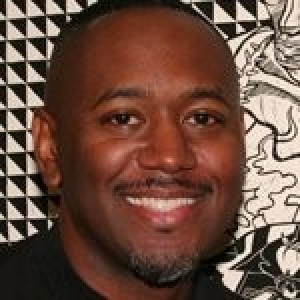
Steve Prince knew he wanted to be an artist since he was five years old. Art can be a powerful way to worship, and being a maker of things allows us to reflect God the Creator. For Prince, being a Christian and an artist go hand and hand—he sees his artwork as a calling. In this episode, Dru Johnson talks to Steve about his life as a Christian artist, the influence of his Catholic upbringing in New Orleans, how he communicates through art, and how Scripture and art relate. They discuss a piece of Prince’s art.
Show notes:
0:00 Being a Christian and an artist
6:43 Church background informing art
15:50 Using art to wrestle with Scripture
23:12 “Genesis: In the Beginning”
34:30 Should Christians make monuments of humans?
43:30 The Bible is alive
Show notes by Serena Tuomi.
Credits for the music used in TBM podcast can be found at: hebraicthought.org/credits.

Friday Aug 06, 2021
Friday Aug 06, 2021
Rabbi Dr. Ari Lamm returns to continue discussing the fascinating and fruitful ways that Jews approach studying Scripture.
Dr. Lamm's Orthodox Jewish upbringing taught him to embrace the view of the Hebrew Bible as layered, complex, and challenging—for, the very idea of God suggests that He has complex and layered ideas to communicate with His creation. Dr. Lamm encourages Christians to be similarly comfortable with questioning biblical texts on a deeper level.
Don’t forget to check out Dr. Lamm’s podcast Good Faith Effort.
Show notes:
0:00 Determining a biblical perspective on a topic the Bible doesn't directly address
9:00 How the Bible is meant to be studied (if we're taking it seriously)
22:50 Explaining the harmony in heaven and the discord on earth
32:31 When Jesus reaffirmed the Jewish tradition of oral Torah
37:58 Christian political philosophers who relied on Jewish wisdom
Show notes by Celina Durgin
Credits for the music used in TBM podcast can be found at: hebraicthought.org/credits.